Wondering if you can trade a tighter city footprint for more space without losing touch with Manhattan? If New City is on your radar, you are likely weighing the everyday reality of the commute, the cost of housing, and whether the lifestyle fits how you want to live. This guide breaks down what New City offers as a New York City commuter base, where the compromises are, and who it tends to suit best. Let’s dive in.
New City at a glance
New City is a hamlet in the Town of Clarkstown in Rockland County, about 25 miles northwest of New York City. It has 34,458 residents across 15.5 square miles, which gives it a much more spread-out feel than many closer-in commuter communities.
The local housing profile also tells you a lot about daily life here. New City has 10,701 households, a median age of 42.8, and a 93.2% owner-occupancy rate. Those numbers point to a market centered on long-term homeownership and a suburban residential pattern rather than a dense apartment-oriented setting.
Commute from New City to NYC
If you work in Manhattan, the biggest question is usually the commute. Based on the available sources, the clearest scheduled Manhattan-bound transit option from New City is the Coach USA Rockland Coaches Route 49/49J weekday commuter bus, which serves New City Main & Collyer and the New City Park & Ride and runs to the Port Authority Bus Terminal and Midtown Express stops.
Travel time can vary a lot depending on the specific run and traffic conditions. The timetable includes examples ranging from about one hour to nearly two hours, such as a 5:28 a.m. departure arriving at 6:29 a.m. and a 6:16 a.m. departure arriving at 8:13 a.m. The schedule also warns that delays may occur because of traffic congestion.
That matters if you are comparing New City to rail-based suburbs. New City is often a stronger fit for buyers with hybrid work schedules or for commuters who are comfortable with a park-and-ride bus routine instead of a rail-first routine.
It is also important to keep the local census commute statistic in context. New City’s mean travel time to work is 35.5 minutes, but that is an average for all workers living there, not a Manhattan-specific commute time.
What the commute tradeoff really looks like
In simple terms, New City asks you to trade some transit convenience for more space and a more suburban home environment. If your top priority is the most direct trip into Manhattan, this may not feel as easy as communities with direct rail service.
If your schedule is more flexible, the equation can look different. Many buyers are willing to accept a bus-based commute because they value larger residential areas, a more homeownership-focused market, and a daily pace that feels less dense than closer-in alternatives.
Housing in New City
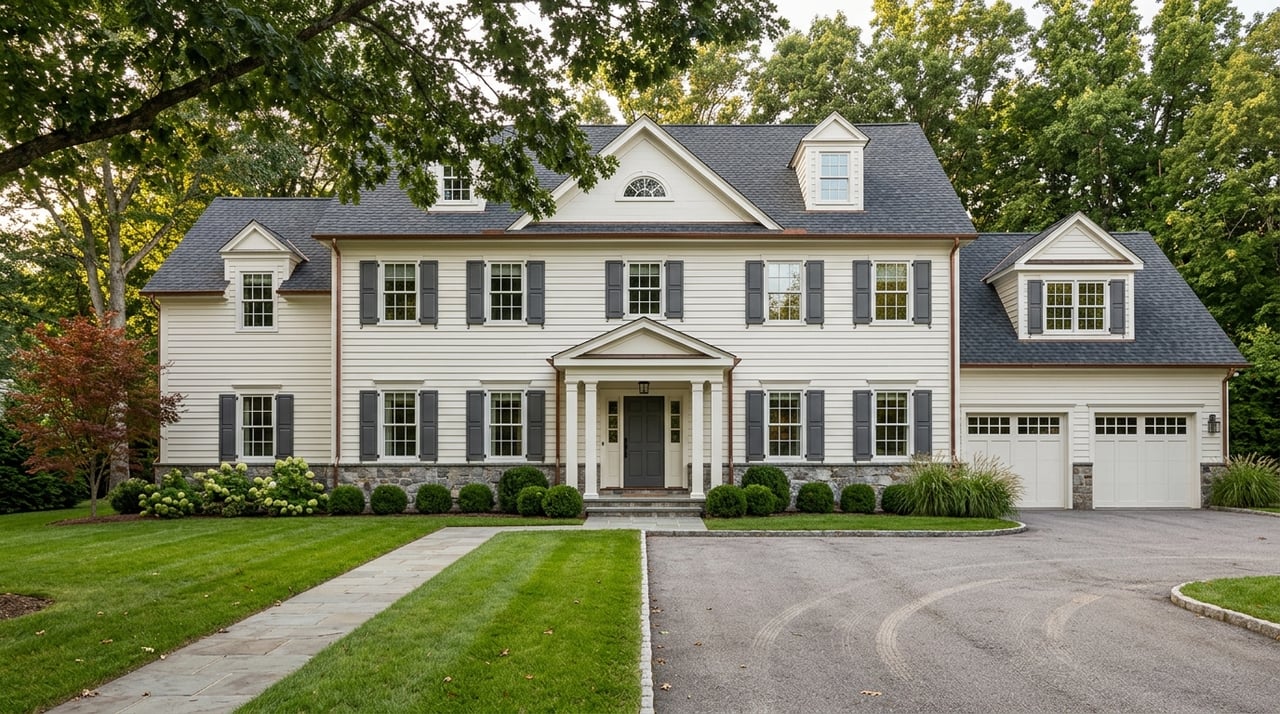
New City’s housing profile leans strongly suburban. A Clarkstown planning report describes the surrounding area as substantially developed and generally made up of moderate-density single-family residential properties, commercial development, and parks, with homes in organized subdivisions or individual houses set back from local roads.
That description is helpful because it matches what the census numbers suggest. New City has 10,992 housing units, 3.2 persons per household, and a housing stock that appears tilted toward owner-occupied suburban homes rather than compact village apartments.
The financial side is just as important when you are budgeting a move. The median owner-occupied home value is $650,700, the median gross rent is $2,242, and median household income is $173,046.
What buyers should expect
For many buyers, New City is less about maximizing walk-to-everything convenience and more about finding a home with room to spread out. The area’s size and development pattern suggest a setting where private homes and residential neighborhoods shape the experience more than a dense downtown core.
That does not automatically make it inexpensive. While New City may compare favorably with some closer-in village markets, the local numbers still reflect higher carrying costs than many farther-out suburbs.
Lifestyle in New City
Lifestyle is where New City becomes easier to picture. New City functions as Rockland County’s civic center, with the county courthouse, county executive, legislature, sheriff, district attorney, county clerk, and board of elections all based there.
That civic role gives the area a sense of local importance beyond just being a bedroom community. It also means New City is tied closely to county services, employment centers, and community infrastructure.
Rockland County also highlights parks, recreation, and community amenities in and around New City. Specific places noted by the county include Kennedy Dells Park, Demarest Kill Park, and Cropsey Community Farm.
For day-to-day convenience, county recreation listings also point to nearby shopping and entertainment destinations such as The Shops at Nanuet and Palisades Center. Together, those features support a lifestyle that feels practical, established, and suburban.
A note on schools and community services
If schools are part of your home search, New City is also a key location within the Clarkstown school system. District pages show multiple elementary schools in the hamlet, along with district headquarters on Old Middletown Road.
The key takeaway is not to rank one area against another, but to understand that New City is closely connected to major local institutions. For many buyers, that adds convenience and makes the community feel well anchored.
New City versus Hudson River villages
A helpful comparison is New City versus closer-in Hudson River villages like Tarrytown, Dobbs Ferry, Irvington, and Hastings-on-Hudson. These places often come up in the same search because buyers are trying to balance commute time, home style, and budget.
The most obvious difference is scale. New City covers about 15.46 square miles, while the land areas cited for those villages range from about 1.98 to 2.94 square miles.
That size difference shapes the feel of each place. New City generally offers more land area and more suburban housing stock, while the villages tend to deliver a tighter, smaller-scale environment.
The price comparison is also notable. Median owner-occupied home values are listed at $650,700 in New City, compared with $685,300 in Tarrytown, $765,500 in Dobbs Ferry, $868,100 in Irvington, and $865,200 in Hastings-on-Hudson.
Why some buyers still choose the villages
The main convenience advantage in those Hudson River villages is direct rail service to Grand Central on Metro-North’s Hudson Line. For some buyers, that rail access is worth the higher home values and smaller geographic footprint.
For others, New City’s value is the opposite. You may get more space, a stronger homeownership profile, and a more suburban daily rhythm, even if the commute into Manhattan is less direct.
Who New City fits best
New City can make a lot of sense if you want a commuter-accessible suburb with a residential feel and are comfortable planning around a bus commute. It may be especially appealing if you work from home part of the week or want a home environment that feels less compressed than many rail-town alternatives.
It can also fit buyers who are prioritizing ownership in an established suburban market. With owner-occupancy above 93%, the area clearly leans toward households that are putting down longer-term roots.
If your top priority is a fast, predictable, rail-based commute into Manhattan every day, you may want to compare New City very carefully with villages that offer direct train service. The right answer depends on how you weigh space, cost, and commute routine.
Bottom line on New City
New City offers a clear proposition for NYC-area buyers: more room, a strong homeownership base, and a suburban lifestyle within reach of Manhattan. The tradeoff is that the commute is more bus-dependent and can vary significantly with traffic.
For many buyers, that balance works well. If you want a more spacious home setting and your schedule gives you some flexibility, New City can be a very practical place to focus your search.
If you are comparing New City with other Hudson Valley and commuter-market options, working with an advisor who understands the tradeoffs town by town can save you time and help you focus on the right fit. For personalized guidance on buying, selling, renting, or evaluating investment opportunities in Rockland County and the lower Hudson Valley, connect with Jacqueline Morales.
FAQs
What is the commute from New City to Manhattan like?
- The clearest scheduled option in the source material is the Coach USA Rockland Coaches Route 49/49J weekday commuter bus, with runs from New City to Midtown that can take about one hour to nearly two hours depending on the schedule and traffic.
Is New City a good fit for NYC hybrid workers?
- New City can be a strong fit for hybrid workers because it offers suburban housing and space, while the Manhattan commute is available but less direct than rail-based suburbs.
What kind of housing market does New City have?
- New City has a strongly owner-occupied suburban housing market, with a 93.2% owner-occupancy rate and a median owner-occupied home value of $650,700.
How does New City compare with Hudson River villages?
- New City generally offers more land area, more suburban housing stock, and a lower median owner-occupied home value than places like Tarrytown, Dobbs Ferry, Irvington, and Hastings-on-Hudson, while those villages offer the advantage of direct rail service.
What is daily life in New City like for residents?
- New City functions as Rockland County’s civic center and offers access to parks, community amenities, shopping, and entertainment, which supports a practical suburban lifestyle with established local infrastructure.