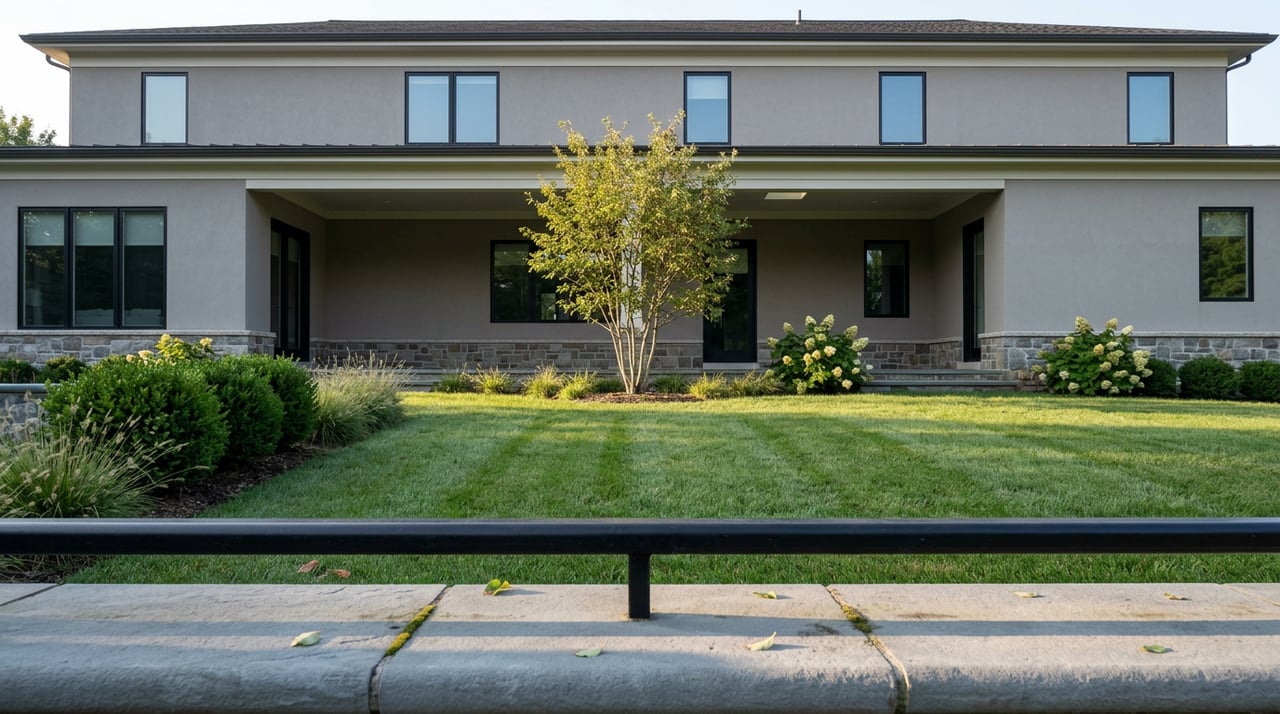
A buyer under contract on a farmhouse outside the Village of Warwick recently asked her attorney for a copy of the mandatory well water test, the one she remembered from her sister's closing in New City two years earlier. Her attorney had to tell her there wasn't one. Not because anyone skipped a step. Because Orange County, unlike Rockland County twenty minutes south, doesn't require it.
That distinction is the whole story. If you're buying or selling a home on a private well or septic system in Warwick, the protections you assume exist because a friend closed on a similar house in Nyack or New City don't automatically travel with you across the county line. Rockland has a law. Westchester has a law. Orange County has neither, and the gap changes who is responsible for finding out what's actually running under the lawn.
What Rockland and Westchester Actually Require
Start with what the reader coming from Rockland or Westchester already knows, even if they don't know they know it.
Westchester County's Private Well-Water Testing Law, Local Law 7 of 2007, states plainly that any property sold or leased with a private drinking water well must have that well tested. The law is triggered the moment a contract of sale is signed. The seller arranges it, the seller pays for it, and the sample has to be drawn by an employee of a certified laboratory, not the homeowner, not the listing agent. Results go straight to the county health department. Neither party can waive it.
Rockland County runs a nearly identical process. The test is required at contract signing, the seller pays, and the lab has to report which certified technician actually collected the sample. If the well fails, the seller has 15 days to notify the buyer and then a choice: fix the problem or cancel and return the deposit.
Both counties also sit on New York's short list of just twelve counties that mandate a septic system inspection before a property changes hands, a group that includes Suffolk, Nassau, Westchester, Onondaga, Monroe, Erie, Niagara, Genesee, Wyoming, Livingston, Ontario, and Yates. Rockland isn't one of them, which means even within the counties this brokerage already serves, the rules aren't uniform. Westchester buyers get both protections. Rockland buyers get the well test but not the septic inspection.
What Orange County Requires
Orange County appears on neither list.
There's no local law forcing a well test when a Warwick property changes hands, and no county mandate for a septic inspection at closing either. New York State doesn't fill the gap. There is currently no statewide law requiring a well test before a home sale anywhere in the state. A bill that would create one, the Private Well Testing Act (Senate Bill S3038, sponsored by State Senator Brad Hoylman-Sigal), is still sitting in the Environmental Conservation Committee as of this writing. If it eventually passes, it would bar closing until both parties have reviewed a state-mandated test report, with no waiver allowed. Until then, it's a proposal, not a rule.
This isn't a loophole anyone is exploiting. It's simply how New York built the system: the state sets minimum construction standards for septic systems (Appendix 75-A of the Sanitary Code) and lets each of its 62 counties decide whether to add a transfer requirement on top. Orange County's Department of Health, through its Sanitary Engineering division, enforces construction and repair permits with real rigor. It just hasn't adopted a point-of-sale testing mandate the way Westchester and Rockland have.
Who Ends Up Responsible Instead
When the county doesn't require it, three other forces step in, and none of them are guaranteed the way a local law is.
Your lender, if you're financing. FHA, VA, and USDA loans all require proof that a private well produces safe water before the loan funds, following HUD's minimum property standards. That requirement doesn't care what county you're in. But it only applies if you're using one of those loan types. A conventional loan doesn't carry the same automatic trigger, and a cash buyer has no lender in the picture to insist on anything.
Your contract, if your attorney builds it in. Without a county law doing the work automatically, the well and septic contingency has to be negotiated into the purchase contract itself, the same way a home inspection contingency is. It's standard advice among real estate attorneys working this corridor, but it's advice, not statute. Skip it, or let it get waived in a competitive multiple-offer situation, and you close without ever seeing a water quality report.
Your own initiative, full stop. New York State's Department of Health still recommends annual bacteria testing for any private well and a broader panel, covering nitrate, arsenic, iron, and manganese, every three to five years. That guidance exists whether or not you're mid-transaction. In a county with no transfer law, it's the only backstop that isn't tied to your financing or your negotiating leverage.
Which Warwick Address You're Actually Buying
Warwick further complicates this because the town isn't served by one water system. It's served by several, and which one touches your address changes what question you're even asking.
Properties inside the Village of Warwick draw from the Village's own municipal supply, treated at its Water Treatment Plant and a separate micro-filtration plant built for Well #2. That water is monitored continuously and reported annually, the same as any public system regulated under the Safe Drinking Water Act. If your future address sits in the Village, the well-testing question doesn't even apply to you.
Step outside the Village line and the picture splits further. Some pockets are served by smaller community systems with their own rate structures, including the Wickham Village Water District, the West Side Greenwood Lake district, and the Eurich Heights Water District. Others rely on nothing but a private well drilled decades ago, and those older properties are more likely to have shallower dug or driven wells that pull water closer to the surface, which makes them more exposed to seasonal drought and surface runoff than a modern drilled well would be.
None of this is disclosed on a listing sheet in a way that answers the question outright. It's the kind of thing you find out by asking the seller's agent directly, before you're deep into attorney review, which water system, if any, actually serves the parcel.
A Comparison That Actually Matters
| County | Well test required at sale | Septic inspection required at sale |
|---|---|---|
| Westchester | Yes, mandatory, non-waivable, triggered at contract signing | Yes, one of 12 counties statewide |
| Rockland | Yes, mandatory, seller pays, 15-day notice on failure | No |
| Orange (Warwick) | No county mandate | No |
The table isn't trivia. It's the reason a buyer moving from a Rockland closing to a Warwick closing needs a different mental checklist, not the same one with the town name swapped out.
Before You Write an Offer on a Warwick Property
- Ask the listing agent, in writing, whether the address is on the Village of Warwick municipal system, one of the smaller districts, or a private well.
- If it's a private well, ask for the most recent test results and when the well was last serviced or its casing inspected.
- If there's a septic system, ask for pumping records and the age of the tank, since New York's design code sizes tanks by bedroom count and older systems built for fewer bedrooms than the house now has can be undersized.
- Build a well and septic contingency into the purchase contract regardless of financing type. It costs nothing to include and everything to discover you needed after closing.
- If you're financing with FHA, VA, or USDA, confirm with your lender early which specific tests they'll require, since the requirement is real but the paperwork timeline varies by loan program.
Frequently Asked Questions
Does this mean Warwick wells are less safe than wells in Rockland or Westchester? No. The absence of a county mandate says nothing about water quality. It says who bears the responsibility for finding out. A well in Warwick can test perfectly clean, and a well in a county with a mandatory law can still fail. The law changes the paperwork trail, not the water itself.
If I'm paying cash, does anything require testing at all? Not automatically. Without a lender in the transaction and without a county law, the only trigger left is a contract contingency your attorney negotiates on your behalf. It's worth asking for even when nobody is requiring it.
Could Orange County adopt a similar law later? It's possible, and the pending state-level bill would make the question moot statewide if it passes. Until either happens, the county-by-county patchwork is the reality a buyer or seller has to work within today.
If you're weighing a purchase or sale on a well or septic property anywhere in Warwick, this is exactly the kind of detail that belongs in your offer strategy from day one, not discovered during attorney review. The Morales Group works this corridor on both sides of the Rockland and Orange County line and can walk you through what your specific address actually requires. Request a Personalized Market Plan to start the conversation before you write the offer, not after.